Plan a scattered ombré rhinestone phone case
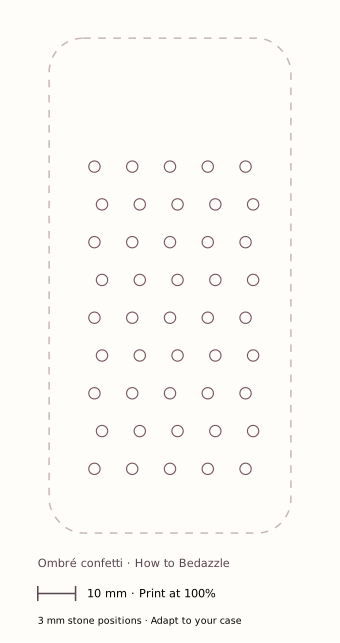
Create a light-to-dark color transition with open space between stones. The template uses 45 positions, rather than a fully covered case.

A three-color shopping list
The ombré confetti template has nine rows of five stones. Use 15 pale stones in the top three rows, 15 medium stones in the middle three, and 15 darker stones in the bottom three. All positions are 3 mm. With 10% spares rounded up per color, prepare 17 of each shade: 51 stones total.
1. Compare the shades together
Sort the three colors into separate trays under the light where you will work. Check the backing as well as the face: mixed products may have different adhesive requirements. Similar sizes from different sellers can vary slightly.
2. Lay out all three zones
Print at actual size and verify the scale. Begin below the camera area. The generic rectangle does not reserve space for your camera model, so adapt the top rows as necessary. Keep the five-column rhythm, or remove affected positions and recount.
3. Soften the transitions
For a gradual look, swap two stones across each color boundary: trade two pale stones with two medium stones, then trade two medium stones with two dark stones. The overall per-color count stays the same. Dry-fit the whole arrangement before gluing.
4. Attach by small sections
Follow your adhesive label. Work from one end of the case toward the other without resting your hand on attached stones. Keep each shade in its own tray so the sequence remains clear.
5. Keep a repair record
After full cure and inspection, photograph the arrangement for your own reference and keep the spare stones with their size and supplier details. Matching replacements later can be difficult if you only remember the color name.
Why not calculate by the whole case area?
This is a discrete 45-position layout, so the template count is more useful than a full-coverage estimate. Use the calculator when planning continuous rows over a measured rectangular area.